
 Electronics & Computer
 Smart Home & Security
 Home Appliances
 Kitchen & Dining
 Power & Charging
 Gaming & Entertainment
 Automotive & Outdoor
 Health & Personal Care
 Office Electronics
 Smart Lighting & Ambient

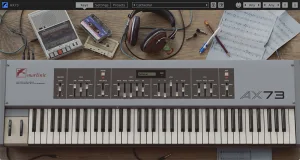
Martinic Plugins Review: Four Tools for Vintage-Inspired Music Production
Affiliate disclosure: This article contains affiliate links. We may earn a commission if you purchase through them, at no extra cost to you.
The right music plugin should solve a musical problem. You might need a synthesizer for a new bass line, an electric piano for a chord progression, an organ for a rhythmic hook, or effects that bring an existing recording to life. Choosing according to that need is more useful than collecting tools without a clear purpose.
Martinic develops virtual instruments and audio effects, with a catalog that draws on vintage equipment. This Martinic plugins review focuses on four different options: AX73, AXFX, Pianet T, and Elka Panther. Three generate instrument sounds; one processes audio. Understanding that difference makes the collection easier to navigate.
This is an editorial buying guide based on Martinic’s published product information and documentation. It is not a hands-on listening test or a performance benchmark. The workflow examples below are suggested ways to evaluate these tools in your own projects.
Which Martinic Plugin Fits Your Project?
| Plugin | Type | Reason to explore it |
|---|---|---|
| AX73 | Synthesizer instrument | Layered synth sounds and sound design |
| AXFX | Audio effects rack | Processing instruments and recordings |
| Pianet T | Electric piano instrument | Keyboard parts with a retro identity |
| Elka Panther | Combo organ instrument | Organ-led arrangements and vintage textures |
1. Martinic AX73: A Synthesizer for Layered Sound Design

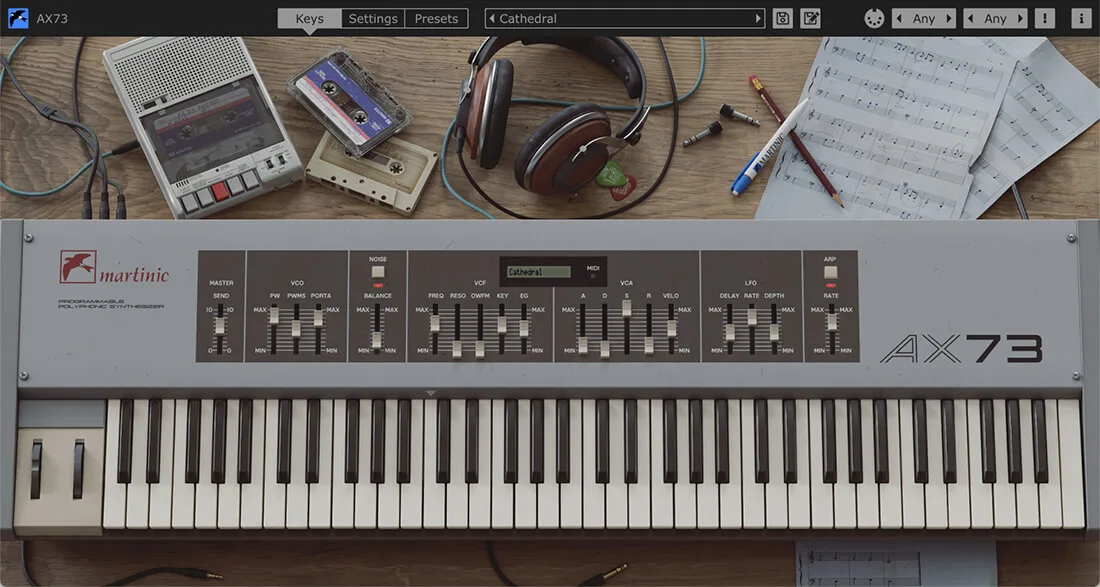
AX73 reinterprets the original analog synthesizer as a software instrument. Martinic describes four oscillators distributed across two synth layers, alongside modulation options and an eight-module effects section. Its documentation also describes stacking or splitting the layers, giving players different ways to organize a patch.
That architecture makes AX73 a logical starting point if your main goal is creating synth parts. A useful evaluation exercise would be to build a simple bass patch first, then try a sustained chord sound. These two tasks reveal different aspects of an instrument: articulation and control in the first case, movement and balance in the second.
For a layered arrangement, begin with one layer and establish its musical role before adding another. The extra layer should contribute something identifiable, such as a contrasting register or a different envelope. Listening inside a full song helps you decide whether the additional complexity improves the part.
Our editorial take: AX73 is the option to investigate when you want an instrument with room for programming. Its deeper controls may require more learning than a narrowly focused keyboard plugin. Presets can provide starting points, but adjusting them to your arrangement is the more useful test.
2. Martinic AXFX: An Effects Rack for Existing Audio

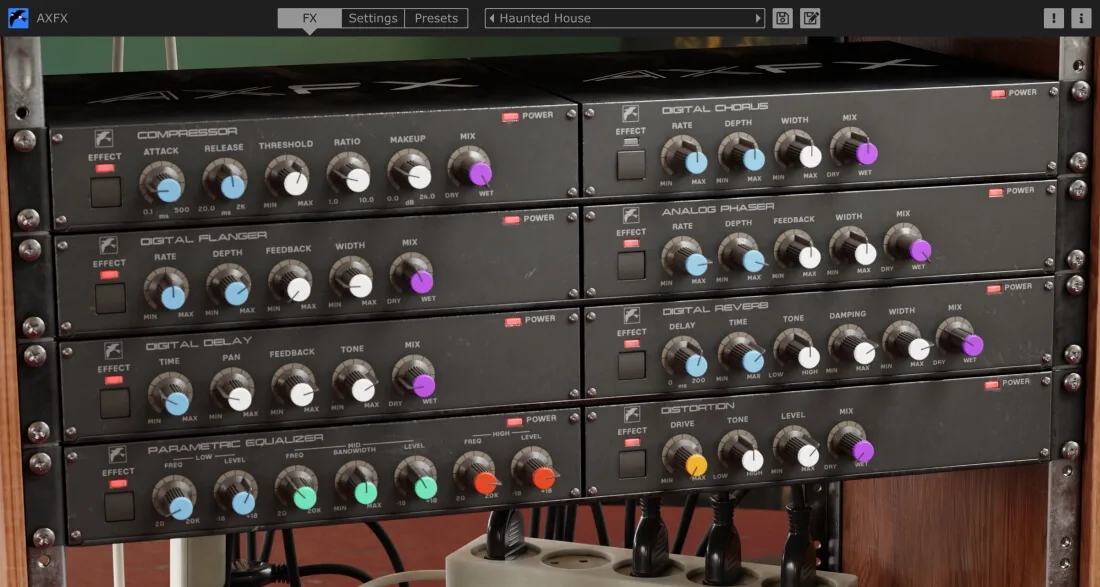
AXFX serves a different purpose. It is an eight-unit effects rack rather than a synthesizer. The documented processors are compressor, phaser, flanger, chorus, delay, reverb, distortion, and EQ, with flexible ordering through the FX Chain. Martinic relates its design to the effects section of AX73.
Consider AXFX if you already have instrument sounds you like but want another way to shape them. For example, an electric piano recording might become the starting point for a modulation experiment, while a dry synth phrase could provide material for exploring delay and reverb.
Keep the first experiment simple. Add one processor, learn its contribution, and then introduce another. Changing the order can be educational: distortion before a time-based effect creates a different processing situation from distortion after it. Use matched listening levels so a louder result does not automatically seem preferable.
Our editorial take: AXFX addresses the broadest range of audio sources in this selection. However, producers who already have several effects suites should compare its workflow with tools they own. A purchase makes more sense when the rack offers a sound or working method you will actually use.
3. Martinic Pianet T: A Focused Electric Piano Instrument

Pianet T recreates a 1970s electro-mechanical piano through Martinic’s modeling approach. The developer documents Harmonic Mix controls and effects including vibrato, tremolo, and chorus, plus a vintage tube combo amp simulation with spring reverb and cabinet simulation.
For a songwriter, its appeal is the focus of the instrument. Instead of starting with an open-ended synthesizer, you begin with an electric piano identity and explore variations around it. That can be a practical approach when a song needs a keyboard foundation and you want to keep attention on the performance.
Try a sparse progression before building a dense arrangement. Listen to the note lengths, spaces between chords, and relationship with the bass. Then explore the effects separately. A musical part that works without heavy processing gives you a clearer reference when you decide how much movement or ambience to add.
Our editorial take: Pianet T deserves attention if electric piano parts regularly appear in your work. It is a more specialized choice than AX73. Evaluate its character with the songs you actually produce rather than assuming that every retro keyboard sound will suit every arrangement.
4. Martinic Elka Panther: Vintage Combo Organ Character

Elka Panther brings the Italian combo organ tradition into software. Martinic’s documentation describes Panther 300 and Panther 100 engines, together with tone controls and additional processing options. The product information also identifies vibrato, an amplifier simulation, and LEM Echo Music delay features.
This is the instrument to explore when the arrangement calls for an organ identity. A repeated chord figure, a short melodic answer, or a held background part can each give the keyboard a different role. Decide which role you need before adding more notes or processing.
For an initial test, use a short passage with a restrained bass and drum arrangement. Change the organ settings while keeping the performance constant. This makes it easier to hear how a tonal adjustment affects the musical balance rather than confusing a new sound with a new performance.
Our editorial take: Elka Panther offers a distinct direction for producers drawn to combo organ textures. It should be evaluated as a particular instrument, not as a universal replacement for every kind of organ. Listen to the official examples and test available demos against your intended material.
Shop Martinic — Find Elka Panther
Build a Useful Workflow Before Buying More Plugins
A sensible first step is choosing either a sound source or a processor. If a project lacks a convincing keyboard part, start by evaluating an instrument. If the musical material already works and needs tonal shaping or space, evaluate effects. Buying both at once can make it harder to identify what actually improved the project.
Keep a short reference session for comparisons. Include a few MIDI phrases for instruments and a few dry recordings for effects. Return to the same material when testing new tools. Consistent input makes differences easier to judge and helps prevent preset browsing from replacing musical decisions.
Compatibility and License Checks
Before purchasing, confirm the current system requirements and plugin formats for the exact product. Match them to your operating system, processor architecture, and DAW. The presence of a familiar format name alone does not establish that every installer will work with every computer.
Martinic’s catalog also describes a One Year License option alongside full versions. Check the selected license at checkout so you understand its duration. Compare bundle contents with individual purchases, and verify current prices directly rather than relying on an old promotion.
Frequently Asked Questions
Are these physical keyboards or software products?
The featured products are software plugins. They do not include a physical keyboard, computer, or audio interface. Review each product’s host and installation requirements before buying.
What is the main difference between AX73 and AXFX?
AX73 is a synthesizer instrument that generates sound. AXFX processes incoming audio. Choose according to whether you need a new musical sound source or effects for material you already have.
Have these plugins been independently tested for this article?
No. This guide compares their documented roles and features. Sound quality, CPU usage, latency, and reliability have not been independently measured here.
Final Verdict
Martinic’s four featured plugins address complementary needs: AX73 for synthesis, AXFX for processing, Pianet T for electric piano parts, and Elka Panther for combo organ sounds. The strongest choice is the one that fills a clear gap in your current workflow. Explore the catalog, check compatibility, and evaluate the available demonstrations before choosing your next tool.
Shopping note: All product images and shopping buttons in this article open the Martinic product catalog through our affiliate link. Search for the featured name to review its current details.












Reviews
There are no reviews yet.